 ToddlerBites
Use this as a map, not a schedule. Babies progress at different rates, and a baby who is a month behind one of these rows is almost always fine. What matters is steady forward movement, not hitting the dates.
The constant across every stage: until 12 months, breast milk or formula is the primary source of nutrition. Solids are practice, exposure, and iron.
What belongs on a 6 months baby food chart?
| Meals a day | 1, building to 2 |
|---|---|
| Texture | Smooth puree, or soft finger-length strips you can squash between thumb and forefinger |
| Portion | A few teaspoons. Often almost nothing is swallowed — that is expected |
| Milk | Unchanged. Offer solids after a milk feed |
| Priority | Iron every day. Single ingredients so reactions are traceable |
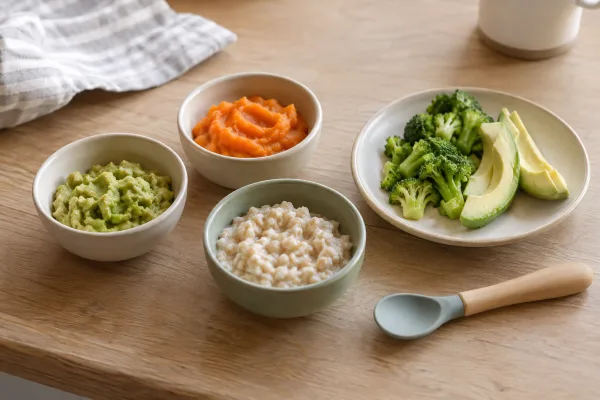
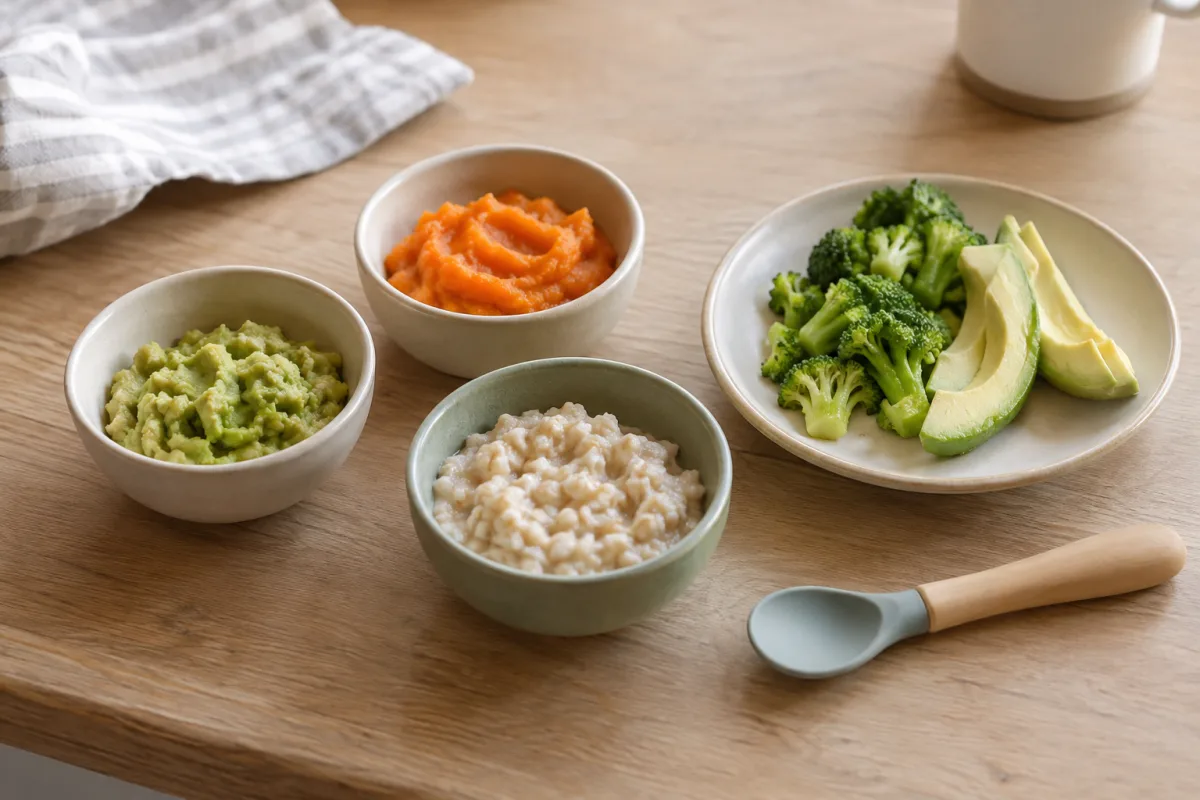
Good foods: avocado, steamed sweet potato, broccoli florets, banana, roasted carrot, toast fingers, full-fat plain yoghurt, iron-fortified cereal, well-cooked shredded meat.
7 to 9 months
| Meals a day | 2, building to 3 |
|---|---|
| Texture | Mashed with soft lumps; finger foods continue. Pincer grasp starts appearing around 8–10 months |
| Portion | Roughly 2–4 tablespoons per meal |
| Milk | Still primary, may begin to reduce slightly |
| Priority | Work through the common allergens. Expand textures — this window matters for later acceptance |
Add: lentils, beans, pasta shapes, flaked fish (bones checked twice), scrambled egg, soft cheese, more varied vegetables.
✓ Don't stay on smooth purees too long
Babies who move to lumps and finger foods in this window generally accept a wider range of textures later. Extended smooth-only feeding is associated with more texture refusal in toddlerhood.
9 to 12 months
| Meals a day | 3, plus 1–2 small snacks |
|---|---|
| Texture | Chopped and minced; soft family food. Pea-sized pieces now that pincer grasp has developed |
| Portion | Roughly 4–6 tablespoons per meal |
| Milk | Reducing as solids increase, but still substantial |
| Priority | Move toward eating the same food as the family, adapted for salt and size |
Add: most family meals with the salt held back, soft cooked meats, a wide range of grains, cheese, and a broadening set of textures.
At 12 months
The big shift: food becomes the primary source of nutrition and milk becomes one component of the diet. Whole cow's milk can now be the main drink, at roughly 350–500ml a day.
Expect appetite to drop noticeably around now. Growth slows sharply after the first birthday, and intake follows. This alarms nearly every parent and is nearly always normal — realistic portions at 12 months covers it.
The chart, personalised to your baby
ToddlerBites adapts every recipe to your child's exact age in months — texture, cut size, and portion — and screens for the allergens you've listed.
Get ToddlerBites freeAllergens: work through them early
Guidance reversed on this, and a lot of circulating advice is out of date. Introduce common allergens early — from around six months — rather than delaying.
One at a time, small amount, earlier in the day so you have waking hours to watch. Keep it in the rotation afterwards; ongoing regular exposure is what matters, not a single introduction.
The main nine: milk, egg, peanut, tree nuts, soy, wheat, fish, shellfish, sesame.
Check with your doctor first if
Your baby has severe eczema, an existing food allergy, or a strong family history of allergy. That introduction plan should be made with a pediatrician or allergist.
⚠️ Avoid throughout the whole first year
- Honey — including baked into food
- Cow's milk as a main drink — fine in cooking
- Added salt and added sugar
- Unpasteurised dairy, raw or undercooked egg, raw fish
- Rice drinks — not suitable under 5
- Whole grapes, whole nuts, popcorn, raw hard vegetables — choking hazards well past the first year
Not started yet? The four readiness signs come first.
Frequently asked questions
What should be on a 6 months baby food chart?
A six-month chart can include soft finger-length foods or smooth and mashed textures, with an iron-rich option such as meat, egg, lentils, tofu, or fortified cereal. Begin with a small daily meal and follow the baby's readiness and appetite.
How many meals should a six-month-old eat?
Many babies begin with one small meal a day and gradually build toward two. Breast milk or formula remains the main source of nutrition, so early meals are primarily for learning and exposure.
When should a baby move beyond smooth purees?
Move toward mashed food with soft lumps and safe finger foods as skills develop rather than staying exclusively with smooth purees. Progress should follow the baby's ability to sit, grasp, move food, and swallow safely.
What foods should babies avoid before 12 months?
Avoid honey, unpasteurised foods, raw or undercooked animal foods, added salt, and choking hazards. Cow's milk can be used in food but should not replace breast milk or formula as the main drink before 12 months.
A note on this guide. This article is general information, not medical advice. Every child is different, and children with medical conditions, developmental differences, or feeding difficulties need an individual plan. Always talk to your pediatrician or health visitor about your own child.