 ToddlerBites

Almost every toddler is picky at some point. Food neophobia, the wariness of unfamiliar food, peaks between roughly two and four years old, and it is a normal stage rather than a parenting failure. A smaller number of children are selective in a way that genuinely warrants support.
The ten questions below reflect what feeding specialists assess: how many foods are accepted, how your child reacts to new ones, whether variety is shrinking, and how much distress mealtimes carry. You get a result straight away, with a short plan for the week.
This is a screening prompt, not a diagnosis
No online quiz can diagnose a feeding disorder. Use the result to decide whether to raise it with your pediatrician, not as a verdict.
1. Roughly how many different foods will your child reliably eat?
2. How do they react to an unfamiliar food on the plate?
3. Has their list of accepted foods been shrinking?
4. Do they gag, retch, or vomit at the sight, smell, or touch of certain foods?
5. Will they eat at least one food from most food groups?
6. How do mealtimes usually feel?
7. Are they bothered if foods touch, or by a specific brand or plate?
8. Can they eat a meal away from home — nursery, a relative's house?
9. Has their growth or weight been flagged by a health professional?
10. How long has this been going on?
0 of 10 answered
Result: typical fussiness
Your answers look like an ordinary toddler phase. Nothing here suggests a feeding problem. The job now is to keep variety on the table without turning meals into a negotiation. This usually eases between four and five.
This week
- Serve one familiar food at every meal next to anything new, so there is always something safe to eat.
- Offer new foods without comment. Ten or more relaxed exposures is normal before a food is accepted.
- Keep meals and snacks at set times, with water in between, so your child comes to the table hungry.
ToddlerBites gives you toddler recipes filtered by age and allergens, plus a meal log that takes seconds, so you can see what actually gets eaten across the week.

Free to download · iPhone and iPad · Pro features come with a 7-day free trial
No iPhone? Start with the free 7-day toddler meal plan.
Result: moderately selective
There is a real pattern here, and it is very manageable at home. Most children in this range widen their range again once pressure comes off and the same foods keep appearing in a relaxed way.
This week
- Serve meals family style and let your child choose from what is on the table. No bargaining, no “one more bite”.
- Pick one rejected food and re-offer a tiny amount next to a safe food several times this week, without comment.
- Write down what was offered and what happened. Patterns are far easier to see on paper than at the table.
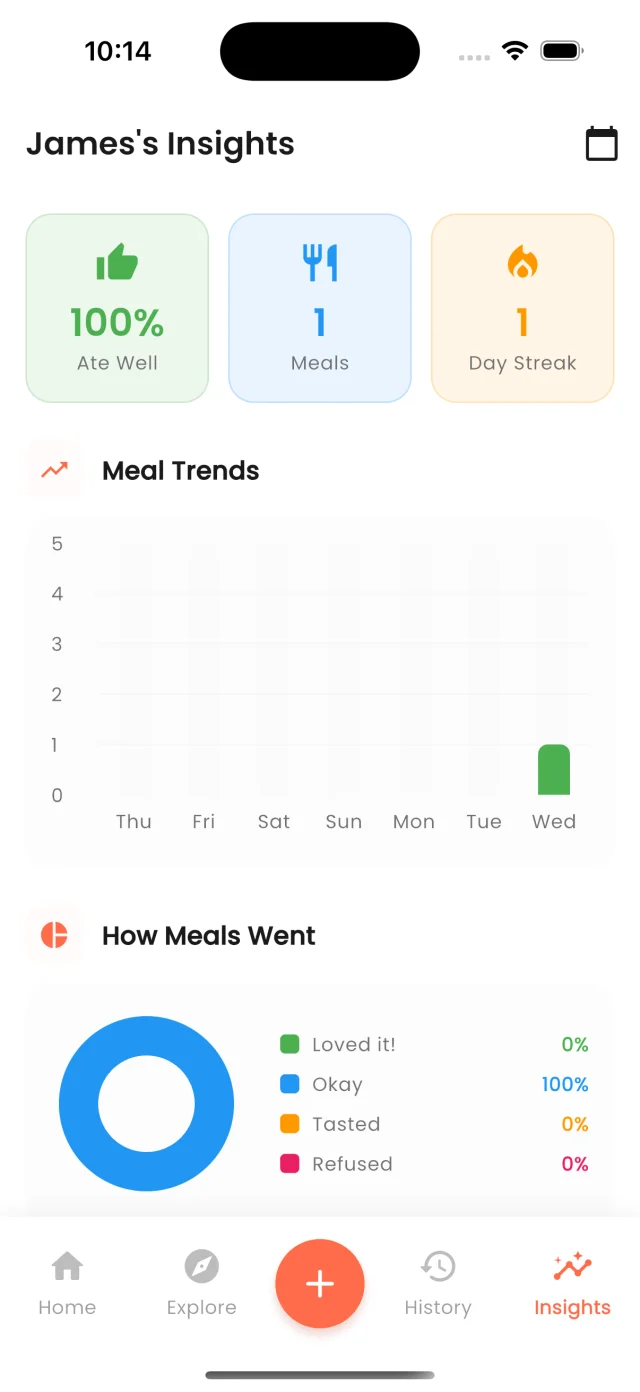
Log each meal in seconds as loved, okay, tasted or refused. ToddlerBites shows how the week went, so you know whether the list is really shrinking or it just feels that way.
Free to download · iPhone and iPad · Pro features come with a 7-day free trial
No iPhone? Start with the free 7-day toddler meal plan.
Result: worth a professional conversation
Several answers point to selective eating beyond the typical range. This is not a diagnosis, and it is not a reason to panic. It is a reason to book a conversation with your pediatrician, who can refer you to a feeding specialist if useful. Early support is easier than late support.
This week
- Book the appointment. If growth has been flagged before, mention it when you book.
- Take the pressure off at home in the meantime: no forcing, no bribes, calm endings to meals.
- Keep a simple record of what is offered, what is eaten and how meals feel. A week of notes helps a doctor far more than memory.
ToddlerBites logs what was offered and how each meal went, then shows the week at a glance. A week of entries gives your pediatrician something concrete to work with.
Free to download · iPhone and iPad · Pro features come with a 7-day free trial
No iPhone? Start with the free 7-day toddler meal plan.
What does this picky eater test measure?
Typical fussiness
Normal, extremely common, and usually self-resolving. Keep offering variety without pressure, eat together, and hold the line on structured meals and snacks. It tends to ease between four and five.
Moderately selective
Real but manageable at home. Focus on removing pressure, serving family style, and repeated neutral exposure. Acceptance often needs ten or more low-key encounters with a food. Meals built around a safe-food anchor are the practical route.
Worth a professional conversation
Not a diagnosis, and not a reason to panic, but worth raising with your pediatrician. Extreme selective eating, including ARFID, is recognised and responds well to feeding therapy. Early support is easier than late support.
⚠️ Speak to a doctor regardless of score if
- Your child is losing weight or has fallen off their growth curve
- They choke or vomit frequently at meals
- They show signs of pain when eating or swallowing
- They're excluding entire food groups for months
- Mealtime distress is affecting the whole family's wellbeing
What to do with your result

Stop guessing whether it is getting better
Picky eating is judged across weeks, not single dinners. ToddlerBites is a free iPhone app that makes the record keeping almost effortless.
- Log a meal in seconds. Loved it, okay, tasted or refused, with a voice note if you want one.
- See how the week went. One simple chart shows loved, okay, tasted and refused meals side by side.
- Keep variety coming. Toddler recipes filtered by age and allergens, so there is always something new next to something safe.
- Ask the awkward questions. The Feeding Coach gives general guidance on picky eating at any hour. It is a Pro feature, free for 7 days.
Free to download · iPhone and iPad · No Android version yet, so grab the free 7-day meal plan instead
If the pickiness arrived suddenly rather than building gradually, read why is my toddler not eating all of a sudden. Sudden change usually has a different cause. For dinners that lean on the foods your child already accepts, see 21 toddler meals for picky eaters.
Frequently asked questions
How do I know if my toddler is a picky eater or just fussy?
Typical fussiness means a child still eats a reasonable range — roughly 30 or more foods — and will usually eat when hungry. Selective eating beyond the typical range shows up as fewer than about 20 accepted foods, a list that shrinks rather than grows, distress or gagging at new foods, and refusal that persists for more than six months.
At what age do toddlers become picky eaters?
Food neophobia — wariness of unfamiliar foods — typically appears between 18 months and 2 years and peaks somewhere between 2 and 4. It is a normal developmental stage, and one theory is that it is protective, arriving exactly when children become mobile enough to put things in their mouths unsupervised.
Will my toddler grow out of picky eating?
Most children do. Typical fussiness usually eases between 4 and 5 years old as neophobia fades. A smaller group has persistent selective eating that benefits from support from a pediatrician or feeding therapist, particularly where growth is affected or entire food groups are excluded.
What should I do if my toddler refuses to eat dinner?
Stay neutral. Do not offer an alternative meal, do not pressure or bargain, and end the meal calmly after a reasonable time. Toddler intake varies enormously day to day, so judge it across a week rather than a single dinner. Structured meal and snack times, with water in between, matter more than any individual meal.
Is ToddlerBites free?
Yes. ToddlerBites is free to download on iPhone and iPad, and the meal log and weekly insights are free to use. Pro features such as the Feeding Coach and photo meal scanning come with a 7-day free trial on the yearly plan; see plans and pricing. There is no Android version yet.
A note on this guide. This article is general information, not medical advice. Every child is different, and children with medical conditions, developmental differences, or feeding difficulties need an individual plan. Always talk to your pediatrician or health visitor about your own child.