 ToddlerBites
Most picky-eating advice fails because it starts from the meal you wish your toddler ate. This starts from the meal they'll actually accept.
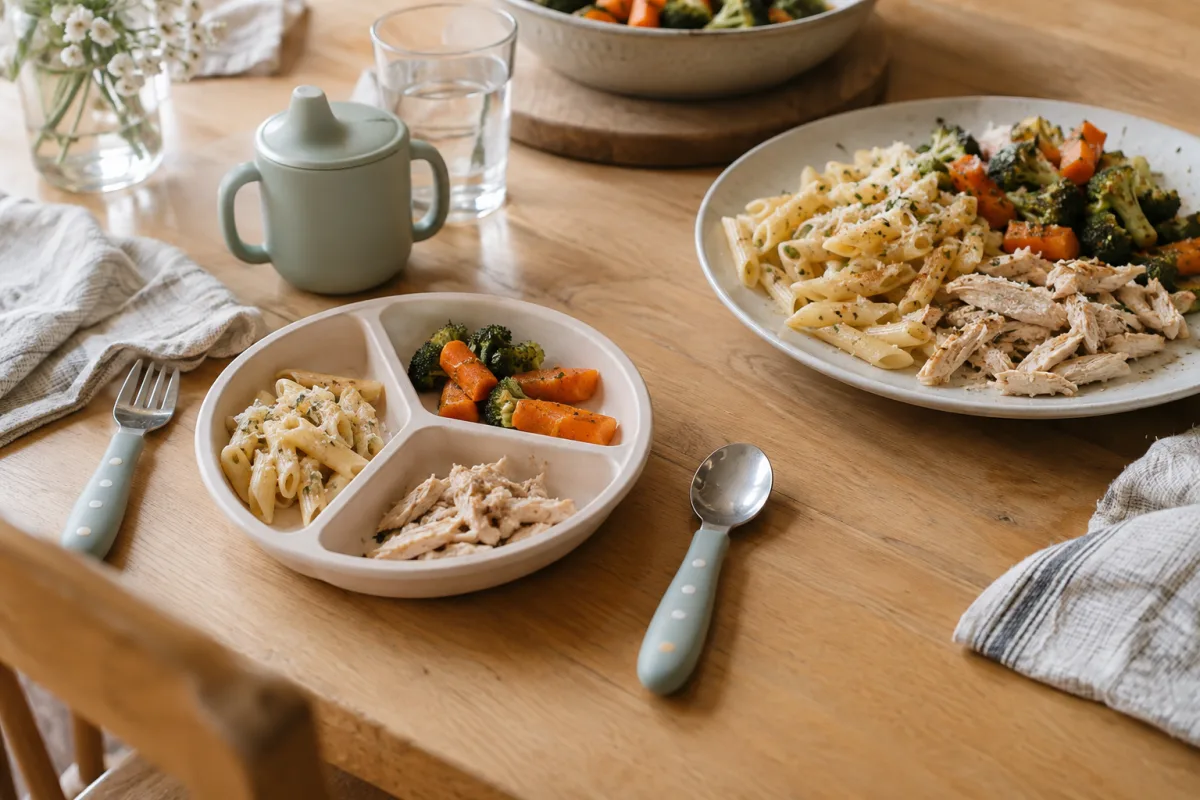
The organising idea is the safe food anchor: every plate contains at least one thing you're confident they'll eat. That anchor makes the rest of the plate low-stakes. A toddler facing a plate of entirely unfamiliar food has one option — refuse. A toddler with buttered pasta plus one new thing can ignore the new thing and still eat dinner. Nobody has to win.
✓ The one-new-thing rule
One unfamiliar item per meal, served in a small amount, with no commentary. Not three. Not "just try it." Just there, on the plate, unremarkable.
Which toddler meals for picky eaters work best?
- Buttered pasta + roast broccoli — roasting makes it sweet and crisp rather than soggy.
- Pesto pasta + peas stirred through — green is already the expected colour, so peas don't read as an intrusion.
- Mac and cheese + shredded chicken — protein hidden in plain sight.
- Pasta with hidden-veg tomato sauce — blend carrot and red pepper into the sauce.
- Cold pasta salad — sweetcorn, cucumber, a little cheese. Temperature-averse toddlers often prefer cold food.
- One-pot orzo — cooked in stock with finely grated courgette.
Bread-anchored dinners
- Cheese quesadilla + mashed black beans — beans go inside, texture stays smooth.
- Mini pizzas on a muffin base — they add their own toppings, which raises acceptance a lot.
- Grilled cheese + tomato soup for dipping. Dipping is a gateway.
- Pitta pockets — deconstructed, so they can build it themselves.
- French toast fingers — eggs delivered in the least egg-like form available.
- Toast soldiers with a soft-boiled egg.
Potato and rice anchors
- Baked potato + beans and cheese.
- Sweet potato wedges + chicken strips.
- Fried rice with finely diced vegetables and scrambled egg.
- Rice bowl, deconstructed — every component in its own pile, not mixed.
- Potato rösti with grated carrot mixed in.
- Shepherd's pie — mash on top is usually the selling point.
Snack-plate dinners
A plate of six small things is a legitimate dinner. It is often the highest-acceptance meal of the week, and there is no reason to feel bad about it.
- Toddler snack board — cheese cubes, cucumber, crackers, halved-lengthways grapes, hummus, breadsticks.
- Breakfast for dinner — pancakes, fruit, yoghurt.
- Dip platter — hummus, guacamole, cream cheese with things to dip.
Meals that adapt to your toddler, not the other way round
ToddlerBites learns which recipes your child actually finishes, hides the ones they've rejected, and plans a week around what works.
Get ToddlerBites freeFive things that make picky eating worse
- Pressure. "Three more bites" reliably reduces long-term acceptance of that food. It buys tonight and costs next month.
- Short-order cooking. Making a second meal on refusal teaches that refusal produces a better option.
- Dessert as payment. Framing pudding as the reward tells a toddler that vegetables are the price and sweets are the prize.
- Commentary. Watching hopefully and saying "do you like it?" turns eating into a performance.
- Grazing. A toddler with continuous snack access is never hungry at dinner. Structured meals and snacks, with water between, changes more than any recipe.
What actually helps
- Keep offering, without pressure. Acceptance often takes ten or more neutral exposures. Most people stop at three.
- Serve family style. Let them serve themselves from bowls — choosing is most of the battle.
- Eat the same food, together. Modelling beats explaining.
- Let them play with it. Touching, squashing and licking are real steps toward eating.
- Keep portions small. A big serving reads as a demand. Seconds are always available.
When it might be more than picky eating
Fewer than about 20 accepted foods, gagging or vomiting at the sight of food, dropping foods without replacing them, weight loss, or distress that dominates every meal — those warrant a conversation with your pediatrician, who may refer to a feeding therapist. Extreme selective eating (sometimes ARFID) is a recognised condition and responds well to proper support.
Not sure where your child sits? Try the picky eater test. If the refusal appeared suddenly rather than building over months, why is my toddler not eating all of a sudden is the more useful read.
Frequently asked questions
What are easy toddler meals for picky eaters?
Start with a familiar carbohydrate such as pasta, bread, rice, or potato, add a protein the child usually accepts, and place one unfamiliar food alongside it. A safe-food anchor gives the child something to eat without turning the new food into a demand.
Should I cook a separate dinner for a picky toddler?
Usually you can adapt the family meal instead. Keep components separate, include at least one accepted food, and let the child decide what and how much to eat. This avoids short-order cooking while keeping the meal manageable.
How should I introduce a new food to a picky eater?
Offer one small piece beside familiar foods without asking for a bite or praising the child for trying it. Repeated neutral exposure is more useful than pressure, hiding the food, or replacing the whole meal when it is refused.
When does picky eating need professional help?
Talk to a clinician if the accepted-food list keeps shrinking, whole food groups disappear, eating causes gagging or distress, growth is affected, or family meals have become consistently unmanageable.
A note on this guide. This article is general information, not medical advice. Every child is different, and children with medical conditions, developmental differences, or feeding difficulties need an individual plan. Always talk to your pediatrician or health visitor about your own child.