 ToddlerBites
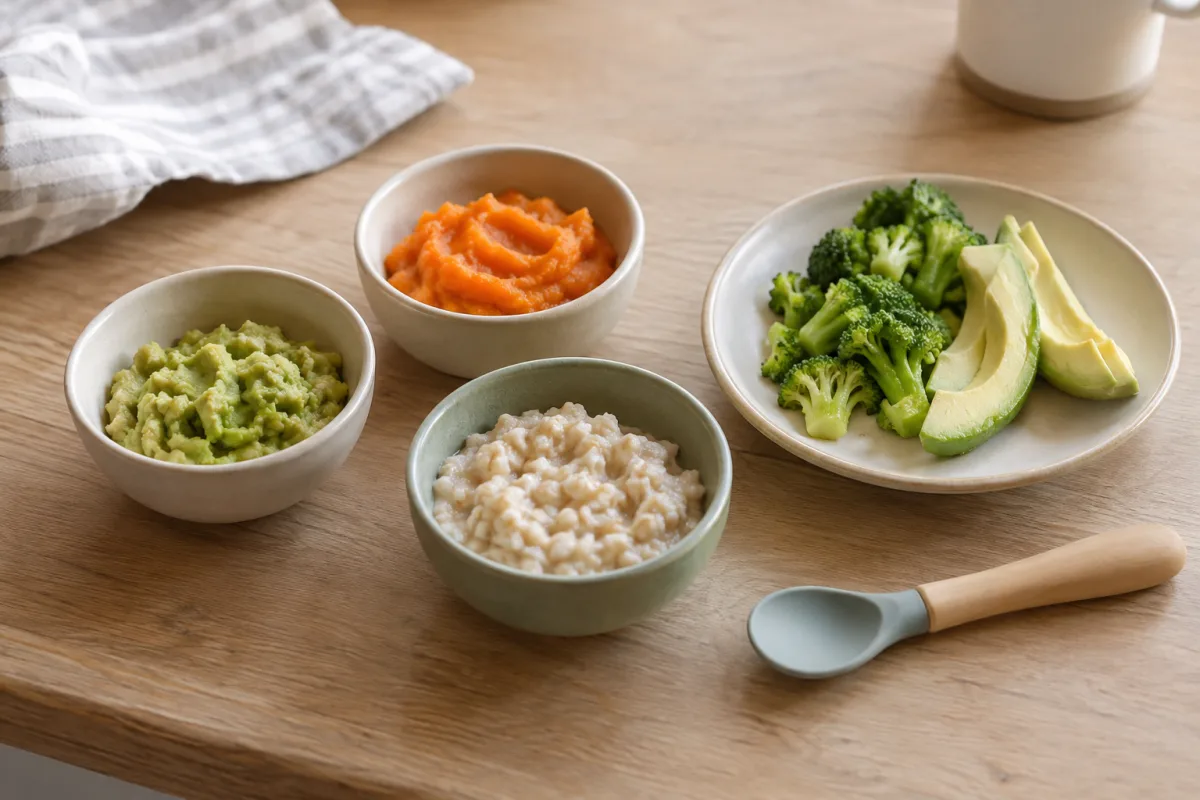
At six months most babies use a palmar grasp: they rake food into a closed fist and eat whatever sticks out the top. That single fact determines almost everything about how you should cut food.
The target shape is a finger-length strip, about the size of an adult pinky finger. Long enough to protrude from a fist. Soft enough to squash between your thumb and forefinger. If you can't squash it, it's too firm.
Around 8–10 months the pincer grasp develops and you can move to pea-sized pieces. Until then, bigger is genuinely safer than smaller — small hard pieces are the higher risk.
✓ The squash test
Press the piece between your thumb and index finger. If it flattens with gentle pressure, a baby's gums can manage it. If it resists, cook it longer.
What are the best baby led weaning foods to start with?
| Food | How to prepare |
|---|---|
| Sweet potato | Roast or steam in fat batons until a fork slides through with no resistance |
| Broccoli | Steam florets until soft — the stem is a built-in handle |
| Cauliflower | Same as broccoli; steam well past al dente |
| Carrot | Batons, roasted or steamed until soft. Never raw |
| Butternut squash | Roasted wedges, skin removed |
| Green beans | Steamed whole until they bend easily |
| Courgette / zucchini | Batons, roasted or sautéed soft |
| Parsnip | Roasted batons |
| Bell pepper | Roasted strips, skin removed if tough |
| Asparagus | Steamed spears, woody ends trimmed |
| Beetroot | Cooked wedges. Expect dramatic nappies |
| Peas | Lightly smashed, or served on a loaded spoon |
Fruit
| Food | How to prepare |
|---|---|
| Avocado | Wedges, skin off. Roll in baby cereal for grip — it's slippery |
| Banana | Cut in half crossways, peel down halfway to leave a handle |
| Pear | Very ripe, in wedges. Steam if firm |
| Peach / nectarine | Ripe wedges, skin removed |
| Mango | Ripe spears — slippery, so leave a little skin as a grip if you like |
| Melon | Ripe spears |
| Apple | Cooked only. Steam or bake wedges until soft. Never raw |
| Plum | Ripe wedges, stone removed |
| Kiwi | Ripe, peeled spears |
| Blueberries | Quartered, or squashed flat. Never whole |
| Strawberries | Large ones quartered lengthways |
| Grapes | Quartered lengthways. Never whole, never halved crossways |
⚠️ Round fruit is the classic hazard
Grapes, cherry tomatoes and blueberries are almost exactly the diameter of an infant airway. Quarter them lengthways — a half cut crossways is still a plug.
Protein and iron
This is the category that matters most. The iron babies are born with starts running low around six months, and breast milk is not a rich source. Offer something iron-rich every day from the start.
| Food | How to prepare |
|---|---|
| Chicken thigh | Slow-cooked and shredded along the grain into soft threads |
| Beef | Slow-cooked, shredded. Or a thick strip of well-cooked steak to gnaw |
| Lamb | Slow-cooked, shredded |
| Salmon | Flaked, bones checked twice |
| Lentils | Cooked soft, in thick fritters or on a loaded spoon |
| Chickpeas | Squashed flat, or blended into hummus on toast |
| Black beans | Cooked very soft and lightly squashed |
| Tofu | Firm tofu in fat fingers, lightly pan-fried for grip |
| Egg | Omelette strips, or hard-boiled wedges |
| Iron-fortified cereal | Thick enough to load on a spoon or spread on toast |
✓ Pair iron with vitamin C
Plant iron absorbs far better alongside vitamin C. Lentils with pepper strips, or beans with a few pieces of soft fruit, does more than either alone.
Grains and dairy
- Toast fingers — thin scrape of unsalted butter or smooth nut butter. Lightly toasted holds together better than fresh bread, which can ball up.
- Pasta — large shapes like penne or fusilli, cooked past al dente.
- Porridge / oatmeal — thick, on a pre-loaded spoon.
- Full-fat plain yoghurt — pre-loaded spoon. Unsweetened.
- Cheese — grated, or in soft strips. Watch the salt; go easy.
- Rice — sticky varieties are easier to pick up than loose grains.
Not sure if a food is safe for your baby's age?
ToddlerBites checks every recipe against your child's age and listed allergens, and tells you the exact cut and texture for the stage they're at right now.
Get ToddlerBites freeNever serve these under 4
⚠️ Choking hazards
- Whole grapes, cherry tomatoes, blueberries
- Whole nuts — use smooth nut butter thinly spread
- Popcorn
- Raw hard vegetables and raw apple
- Hot dogs or sausage in coins
- Chunks of meat or hard cheese
- Thick sticky spoonfuls of nut butter
- Hard sweets, marshmallows, chewing gum
And these under 12 months
- Honey — infant botulism risk, including baked into food.
- Cow's milk as a main drink — fine in cooking; breast milk or formula stays primary.
- Added salt — check stock cubes, bread, cheese, anything packaged.
- Added sugar.
- Unpasteurised dairy, raw or undercooked egg, raw fish.
- Rice drinks — not suitable as a milk substitute under 5.
Working through allergens
Current guidance is to introduce common allergens early — from around six months — not to delay them. Offer one at a time, in a small amount, earlier in the day so you have waking hours to watch. Keep it in the rotation afterwards; ongoing exposure is what matters.
The main nine: milk, egg, peanut, tree nuts, soy, wheat, fish, shellfish, sesame.
Check with your doctor first if
Your baby has severe eczema, an existing food allergy, or a strong family history of allergy. That plan should be made with your pediatrician or an allergist.
New to all this? Start with what is baby-led weaning, which covers readiness signs and the gagging-versus-choking distinction in detail.
Frequently asked questions
What are good first foods for baby-led weaning?
Good first foods are soft enough to squash between two fingers and large enough for a six-month-old to grip. Avocado, steamed sweet potato, broccoli florets, banana, soft carrot batons, toast fingers, egg, and tender strips of meat can all work. Include an iron-rich food every day.
How should food be cut for a six-month-old?
Cut food into soft, finger-length strips about the size of an adult pinky so part of the food sticks out of the baby's fist. Around 8 to 10 months, when the pincer grasp develops, many babies can begin managing smaller, pea-sized pieces.
How can I tell whether a first food is soft enough?
Use the squash test: press the food between your thumb and index finger. If it flattens with gentle pressure, a baby's gums can usually manage it. If it resists, cook it longer. Raw apple, raw carrot, whole nuts, and similarly hard foods are not appropriate.
When should allergenic foods be introduced?
Common allergenic foods are generally introduced from around six months in an age-appropriate form, one at a time and earlier in the day so a reaction can be observed. A baby with severe eczema, an existing allergy, or another medical concern needs advice from a qualified clinician.
A note on this guide. This article is general information, not medical advice. Every child is different, and children with medical conditions, developmental differences, or feeding difficulties need an individual plan. Always talk to your pediatrician or health visitor about your own child.