 ToddlerBites
Under 12 months, breast milk or formula is the primary source of nutrition and solids are practice. After 12 months that reverses: food becomes primary, and milk becomes one component of the diet rather than its foundation.
Plenty of families don't make that switch in practice, and it quietly causes two of the most common toddler feeding problems.
How much milk should a toddler drink by age?
| Age | Milk | Notes |
|---|---|---|
| Under 12 months | Breast milk or formula on demand | Primary nutrition. No cow's milk as a main drink |
| 12–24 months | About 350–500ml whole milk | Full fat. Food is now primary |
| 2–3 years | About 350–400ml | Whole milk generally still recommended |
| 3+ years | About 300–400ml | Semi-skimmed can be introduced if growth is good |
These are guides, not targets to hit exactly. Milk also comes from yoghurt and cheese, which count toward overall dairy intake.
Why too much backfires
It crowds out food
Milk is calorie-dense and filling. A toddler who drinks 800ml a day has taken in a substantial share of their energy needs before touching a meal — and then isn't hungry at the table. Parents interpret this as picky eating, and respond by offering more milk because "at least they're getting something", which deepens the loop.
It causes iron deficiency
This is the more serious one. Cow's milk is very low in iron, and drinking large amounts works against iron status in three ways at once: it displaces iron-rich foods, calcium interferes with iron absorption, and excessive intake can irritate the gut lining and cause small amounts of blood loss.
Iron deficiency is the most common nutritional deficiency in toddlers. It causes tiredness, pallor, irritability — and reduced appetite, which makes it self-perpetuating.
✓ The single most useful change
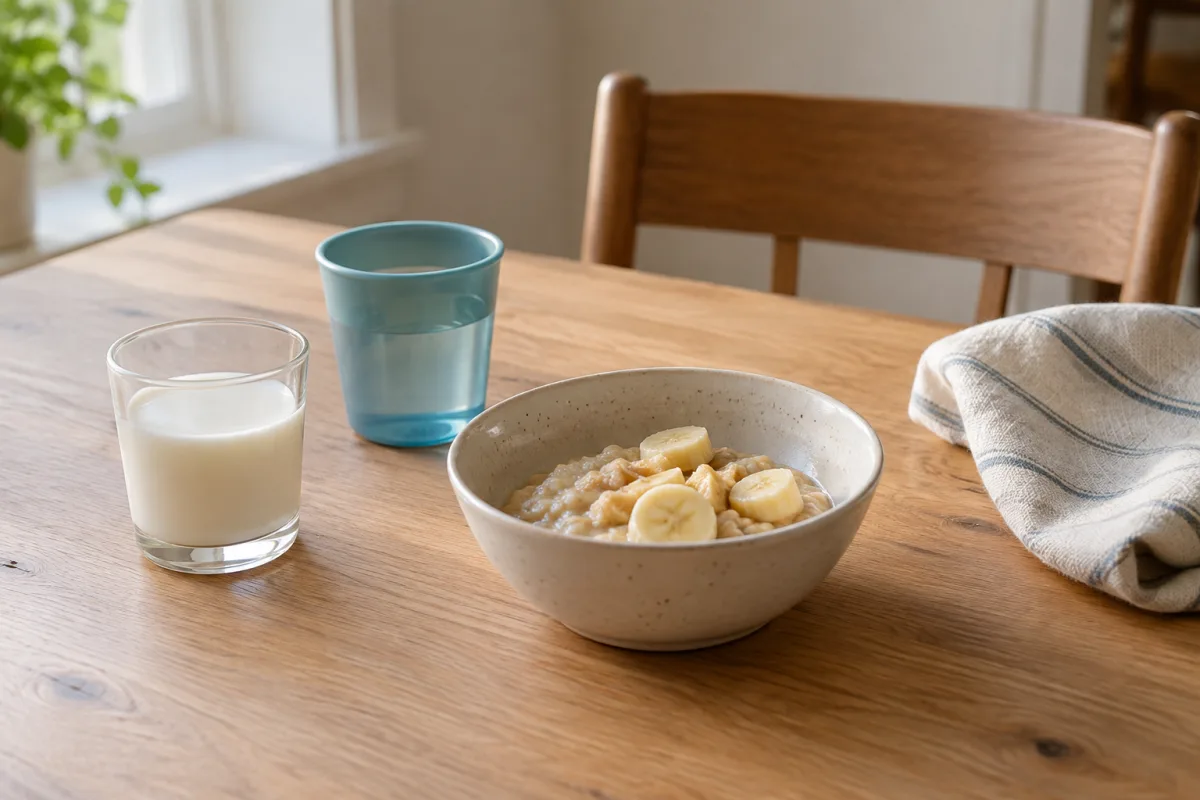
Move milk to after meals rather than before or during. Offer water with food, and milk once the meal is finished. This one change often restores mealtime appetite within a week.
Cutting back without a battle
- Go gradually. Reduce by about 50ml every few days rather than all at once.
- Water with meals, milk after. The order matters more than the amount.
- Move off the bottle. Bottles make large volumes effortless and are often the real mechanism. An open or straw cup naturally reduces intake.
- Drop the bedtime bottle last — it's usually the most emotionally loaded, and it's also the one most associated with tooth decay.
- Replace the comfort, not just the drink. If milk is a soothing routine, substitute a story or a cuddle rather than removing the ritual entirely.
See whether milk is crowding out meals
ToddlerBites logs drinks alongside meals, so the pattern behind a sudden drop in eating becomes obvious rather than something you have to guess at.
Get ToddlerBites freeWhat about other milks?
- Whole cow's milk — the standard recommendation from 12 months.
- Breast milk — entirely fine to continue alongside food for as long as you both want.
- Toddler formula / growing-up milks — generally not necessary for a child eating a varied diet. Often sweetened, and considerably more expensive.
- Fortified soy milk — the most nutritionally comparable plant alternative, if unsweetened and fortified.
- Oat, almond, and rice drinks — much lower in protein and fat. Not suitable as a main milk for toddlers. Rice drinks should not be given under 5 because of arsenic content.
⚠️ Talk to your doctor if
- Your child seems persistently pale, tired, or irritable — possible iron deficiency
- They're drinking well over 500ml daily and eating very little
- You're considering removing dairy entirely — this needs planning to avoid gaps
- There are signs of cow's milk allergy or intolerance — rash, vomiting, diarrhoea, or poor growth
If reduced eating is the concern, how much should a 1-year-old eat covers realistic portions, and toddler constipation covers the other common consequence of high milk intake.
Frequently asked questions
How much milk should a toddler drink each day?
From 12 months, roughly 350 to 500ml of whole cow's milk a day is a practical guide for many toddlers. Yoghurt and cheese also contribute to overall dairy intake, so the number does not need to be treated as an exact target.
Can a toddler drink too much milk?
Yes. Large amounts of milk can crowd out meals and iron-rich foods because milk is filling and naturally low in iron. Persistent excess intake can contribute to iron deficiency.
When can cow's milk become a child's main drink?
Cow's milk can become a main drink from 12 months. Before then, breast milk or infant formula remains the primary milk drink; cow's milk can still be used in cooking.
What should I do if my toddler prefers milk to food?
Offer milk at planned times with or after meals, use water between meals, and move from bottles toward an open or straw cup. Reduce large volumes gradually and ask a clinician for advice if growth or iron status is a concern.
A note on this guide. This article is general information, not medical advice. Every child is different, and children with medical conditions, developmental differences, or feeding difficulties need an individual plan. Always talk to your pediatrician or health visitor about your own child.