 ToddlerBites
⚠️ Read this first
This article covers the dietary side of toddler constipation. It is not a substitute for medical advice. Constipation that persists, causes pain, or involves blood needs to be seen by a doctor — and constipation in a baby under 12 months should always be discussed with a professional rather than managed at home.
A toddler is generally considered constipated if stools are hard, painful to pass, or noticeably less frequent than their own normal. Frequency varies enormously between children — what matters is the change and the consistency, not hitting a particular number.
The common pattern is a cycle: a hard stool hurts, the child starts withholding to avoid the pain, withholding makes the next stool harder still. Breaking that cycle early is much easier than breaking it late.
What helps toddler constipation: fluid or fibre?
This order matters. Adding fibre to a dehydrated child can make things worse — fibre needs water to work. Increase fluid first.
| Age | Rough daily fluid, drinks only |
|---|---|
| 1–3 years | About 1 to 1.4 litres |
| 4–8 years | About 1.6 litres |
Water is the main answer. And a specific culprit worth checking: large amounts of cow's milk. Milk is filling, low in fibre, and displaces both water and fibre-rich food. Many toddlers drinking well over 500ml a day are constipated largely because of it.
Foods that help
The classic loosening foods are often remembered as the P fruits: pears, prunes, peaches, plums, apricots. They contain sorbitol, which draws water into the bowel.
- Pears — soft, ripe, skin off for younger toddlers
- Prunes — chopped small, or as a puree stirred into yoghurt
- Peaches and plums — ripe, in wedges
- Apricots — fresh, or dried and chopped fine
- Peas — easy to add to almost anything
- Broccoli and other soft-cooked vegetables
- Beans and lentils — cooked very soft
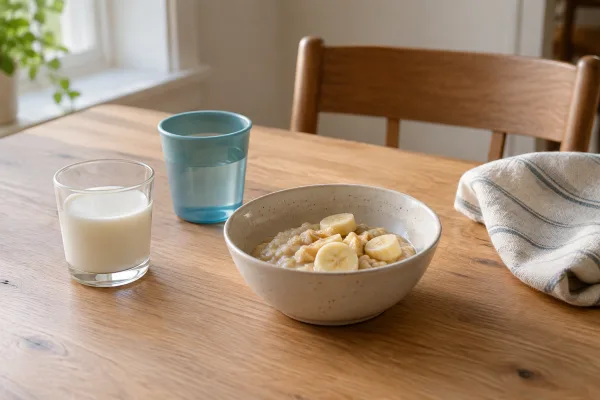
- Wholegrain bread and oats — porridge is an easy daily win
- Berries — quartered under 4
✓ A practical daily combination
Porridge with chopped prunes at breakfast, pear as a snack, peas with dinner, water offered at every meal. That is often enough to shift mild constipation within a few days, without anything medicinal.
Foods that tend to bind
None of these are bad foods. They're worth reducing temporarily while things settle.
- Large amounts of cow's milk — the most common contributor
- Bananas — particularly under-ripe ones
- White bread, white pasta, white rice — low fibre
- Excess cheese
- Apples without skin — the fibre is largely in the skin, though skin is a choking consideration under 4, so cook it soft
- Processed and low-fibre snack foods
Beyond food
- Movement. Physical activity genuinely helps gut motility.
- Toilet routine. Sitting for a few relaxed minutes after a meal uses the body's natural reflex.
- Footstool. Feet supported and knees slightly above hips is a much more effective position than legs dangling.
- No pressure around the potty. Withholding often has an emotional component, and pressure reliably makes it worse.
Spot the pattern in what they're actually eating
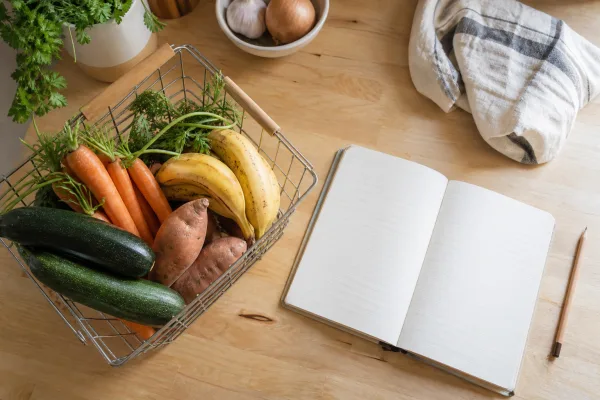
Logging meals in ToddlerBites takes seconds, and makes it much easier to see whether fibre and fluid are genuinely low — or whether milk is quietly crowding everything else out.
Get ToddlerBites free⚠️ See a doctor if
- Your child is under 12 months — always discuss rather than self-manage
- There is blood in the stool or on the nappy
- Constipation has lasted more than two weeks despite dietary changes
- There is significant abdominal pain, a swollen belly, or vomiting
- Your child is losing weight or not growing as expected
- There is soiling between stools, which can indicate overflow from a blockage
- Your child is withholding and distressed about passing stool
Do not give laxatives, suppositories, or mineral oil to a toddler without medical advice.
Constipation frequently suppresses appetite, so if eating has dropped off too, why is my toddler not eating all of a sudden covers the other common causes.
Frequently asked questions
What foods can help a constipated toddler?
Pears, prunes, peaches, plums, apricots, peas, beans, and whole grains can help because they add fibre and, in several cases, sorbitol. Increase fibre gradually and offer fluid alongside it; adding a large amount of fibre without enough fluid can make discomfort worse.
What should a toddler drink for constipation?
Water should be the default drink between meals. Fluid matters before adding more fibre because dry stool is difficult to pass. Milk still contributes fluid, but large amounts can reduce appetite for fibre-rich foods, so review the child's overall milk intake as well as water.
Can too much milk contribute to toddler constipation?
Large amounts of cow's milk can contribute indirectly by filling a child up and displacing water, fruit, vegetables, and other fibre-rich foods. Milk is not automatically the cause, but intake is worth reviewing when constipation occurs alongside poor appetite or a limited diet.
When should I call a doctor about toddler constipation?
Seek medical advice for persistent constipation, blood in the stool, significant pain, vomiting, a swollen abdomen, poor growth, or a child who appears unwell. Food changes are appropriate for mild, short-lived constipation but are not a substitute for assessment when warning signs are present.
A note on this guide. This article is general information, not medical advice. Every child is different, and children with medical conditions, developmental differences, or feeding difficulties need an individual plan. Always talk to your pediatrician or health visitor about your own child.