 ToddlerBites
In the first year, a baby roughly triples their birth weight. In the second year, they gain a fraction of that.
Appetite tracks growth. So the dramatic drop in eating that arrives somewhere around the first birthday isn't fussiness, illness, or a feeding problem — it's the expected consequence of a much slower growth rate. Understanding this prevents a great deal of unnecessary worry, and a lot of counterproductive pressure at the table.
How much food should a 1 year old eat at each meal?
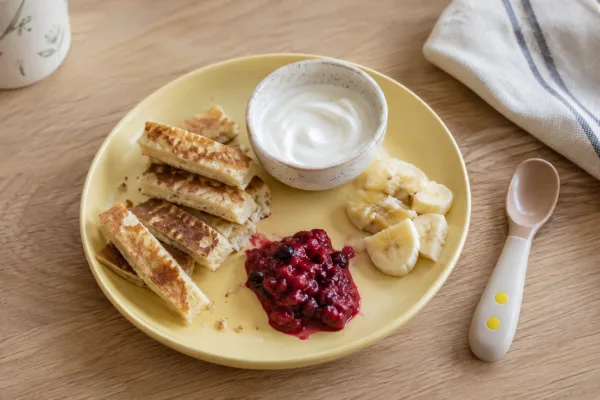
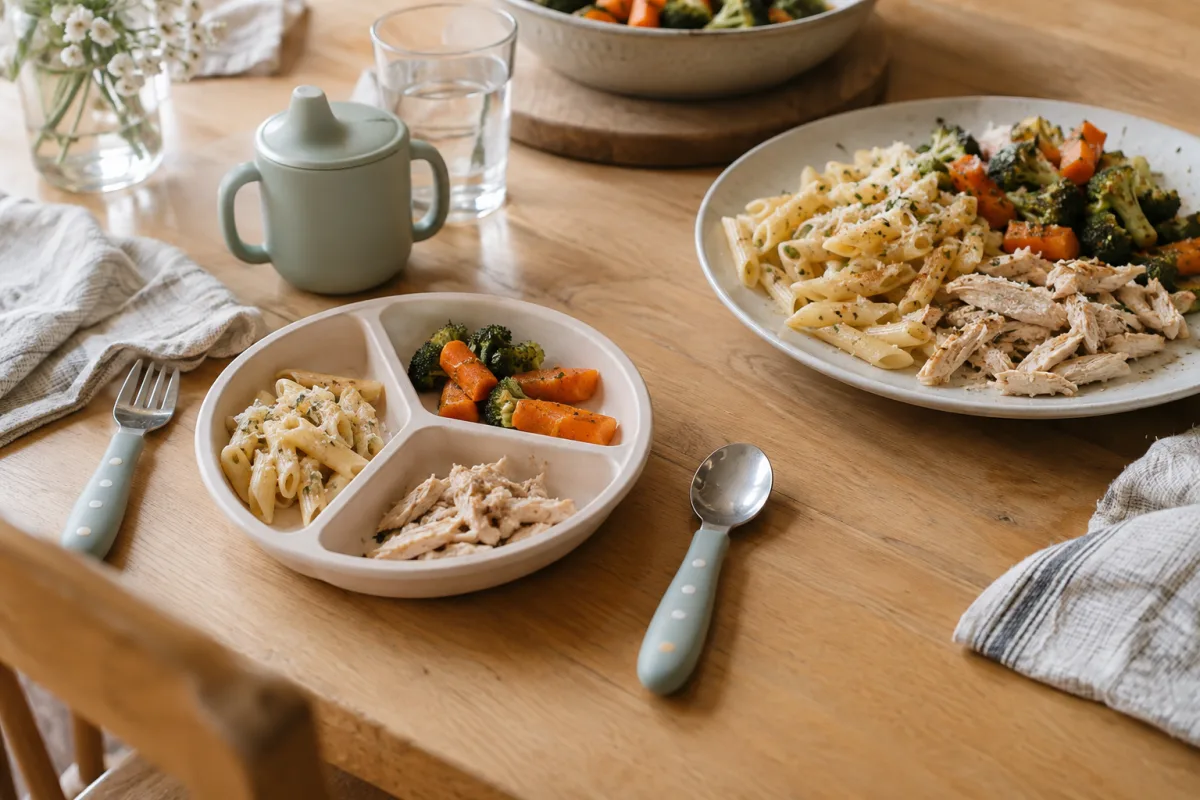
A widely used rule of thumb: about one tablespoon of each food per year of age. For a one-year-old, that's roughly one tablespoon each of protein, carbohydrate, and vegetable or fruit.
That looks alarmingly small on an adult plate. It's a starting point, not a target — offer that, and give more if they finish it. Serving a big portion and watching most of it go uneaten is worse for everyone than serving a small one and topping it up.
| Food group | Starting portion at 12 months |
|---|---|
| Protein — meat, fish, egg, beans | About 1 tbsp |
| Carbohydrate — pasta, rice, potato, bread | About 1 tbsp, or ¼ slice of bread |
| Vegetables | About 1 tbsp |
| Fruit | A few small pieces |
| Dairy | Small pot of yoghurt, or a thumb-sized piece of cheese |
How much milk at one year
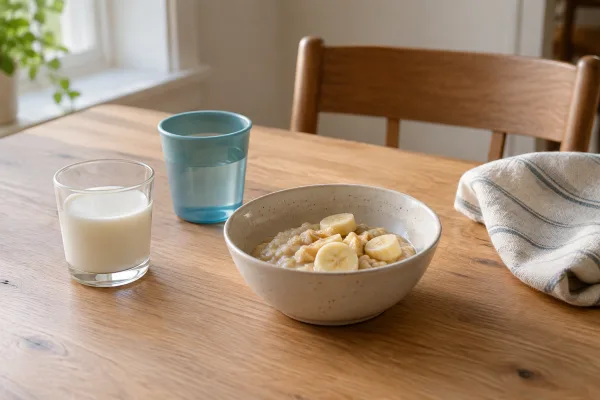
From 12 months, whole cow's milk can become the main drink. The important shift is that milk is no longer the primary source of nutrition — food is.
Roughly 350–500ml a day is a common guide. Substantially more than that starts to cause problems: milk is filling and low in iron, so a toddler drinking large volumes often eats less real food and can end up iron-deficient. Iron deficiency itself suppresses appetite, which produces a self-reinforcing loop.
✓ Move to an open or straw cup
From around 12 months, moving off the bottle helps. Bottles make it very easy to drink large volumes of milk without noticing, and that's the mechanism behind a lot of "my toddler won't eat".
Judge intake across a week
Toddler eating is wildly uneven. A child may eat enormously on Monday and almost nothing on Tuesday, and both are normal.
Looking at a single meal — or a single day — is the fastest route to unnecessary anxiety. Across a week, most healthy toddlers self-regulate their intake remarkably well.
See the week, not the meal
ToddlerBites logs meals in seconds and shows intake across the whole week — which usually reveals that a "terrible eating day" was an ordinary one.
Get ToddlerBites freeThe division of responsibility
A widely used principle in paediatric feeding, developed by dietitian Ellyn Satter, splits the job in two:
- You decide what food is offered, when, and where.
- Your child decides whether to eat, and how much.
Holding that line removes most mealtime conflict. It also means "did they eat enough?" stops being your responsibility to enforce — which is both accurate and an enormous relief.
Iron matters more than volume
At this age the composition of what's eaten matters more than the quantity. Iron is the nutrient most commonly short in toddler diets.
- Red meat, shredded soft
- Lentils, beans, chickpeas
- Egg
- Iron-fortified cereal
- Dark leafy greens, cooked soft
Serve these with a source of vitamin C — soft fruit, peppers, tomato — which meaningfully improves absorption of plant iron.
⚠️ Talk to your doctor if
- Your child is losing weight, or has dropped across growth centiles
- They seem persistently lethargic or pale
- They're refusing whole food groups for weeks at a time
- They eat fewer than about 20 foods in total
- There's choking, gagging, or vomiting at most meals
- You're worried — that alone is reason enough
If the drop in eating was sudden rather than gradual, why is my toddler not eating all of a sudden covers the likely causes. For meal ideas at this age, see toddler dinner ideas.
Frequently asked questions
How much food should a 1 year old eat at each meal?
Start with roughly one tablespoon each of protein, carbohydrate, and fruit or vegetables, then offer more if the child wants it. This is a starting portion rather than a target, and appetite can change substantially from meal to meal.
How many meals should a one-year-old eat?
Most one-year-olds have three meals and two or three planned snacks. Water can be offered between eating opportunities so continuous grazing does not remove their appetite for meals.
Why is my one-year-old suddenly eating less?
Growth slows after the first birthday, so appetite commonly falls compared with late infancy. Look at intake across a week rather than judging one meal or day.
When should I worry that my one-year-old is not eating enough?
Seek professional advice if your child is losing weight, dropping across their usual growth pattern, seems persistently pale or lethargic, regularly chokes or vomits during meals, or refuses whole food groups for weeks.
A note on this guide. This article is general information, not medical advice. Every child is different, and children with medical conditions, developmental differences, or feeding difficulties need an individual plan. Always talk to your pediatrician or health visitor about your own child.