 ToddlerBites
The framework that makes this easy is protein + carb + produce. Hit those three and you have a balanced lunch, regardless of whether it looks like a meal an adult would recognise.
Everything below is built on that. Nothing needs reheating.
Which toddler lunch ideas work at home?
- Cheese quesadilla with cucumber sticks and grapes quartered lengthways
- Scrambled egg on toast fingers with cherry tomatoes, quartered
- Hummus and pitta with pepper strips
- Pasta salad — sweetcorn, cheese, a little olive oil
- Baked beans on toast with a side of apple slices
- Cream cheese bagel with soft fruit
- Leftover dinner, re-plated. Genuinely fine
- Soup with bread soldiers for dipping
- Jacket potato with cheese and beans
- Omelette strips with cucumber and toast
- Yoghurt bowl with fruit and a few oats
- Avocado toast with a boiled egg
Daycare and nursery lunches
Different constraints: no reheating, no adult to help, often no fridge, and frequently a nut-free policy. These travel well.
- Pinwheel wraps — cream cheese, rolled, sliced into rounds
- Pasta salad with peas and sweetcorn — better cold anyway
- Cheese and cracker stackers
- Mini frittata muffins — batch on Sunday, eat all week
- Rice cakes with cream cheese and cucumber
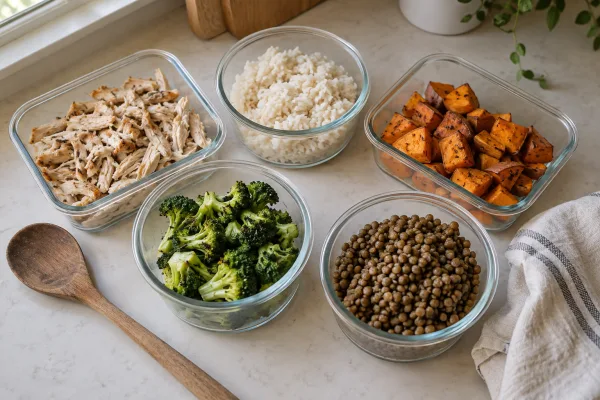
- Chicken and rice bowl, served cold
- Sandwich cut into shapes — presentation genuinely moves the needle at this age
- Hummus pot with breadstick dippers
- Hard-boiled eggs, peeled and halved
- Tortilla roll-ups with turkey and cheese
- Couscous salad with soft roasted vegetables
- Bean and cheese burrito, cut into rounds
✓ What survives four hours in a bag
Hard cheese, cooked pasta, hummus, cooked chicken, boiled eggs, firm fruit and raw vegetables all travel well with an ice pack. Avocado browns, banana turns to paste, and anything crumbed goes soggy against a wet item — pack those separately.
Lunch box builds
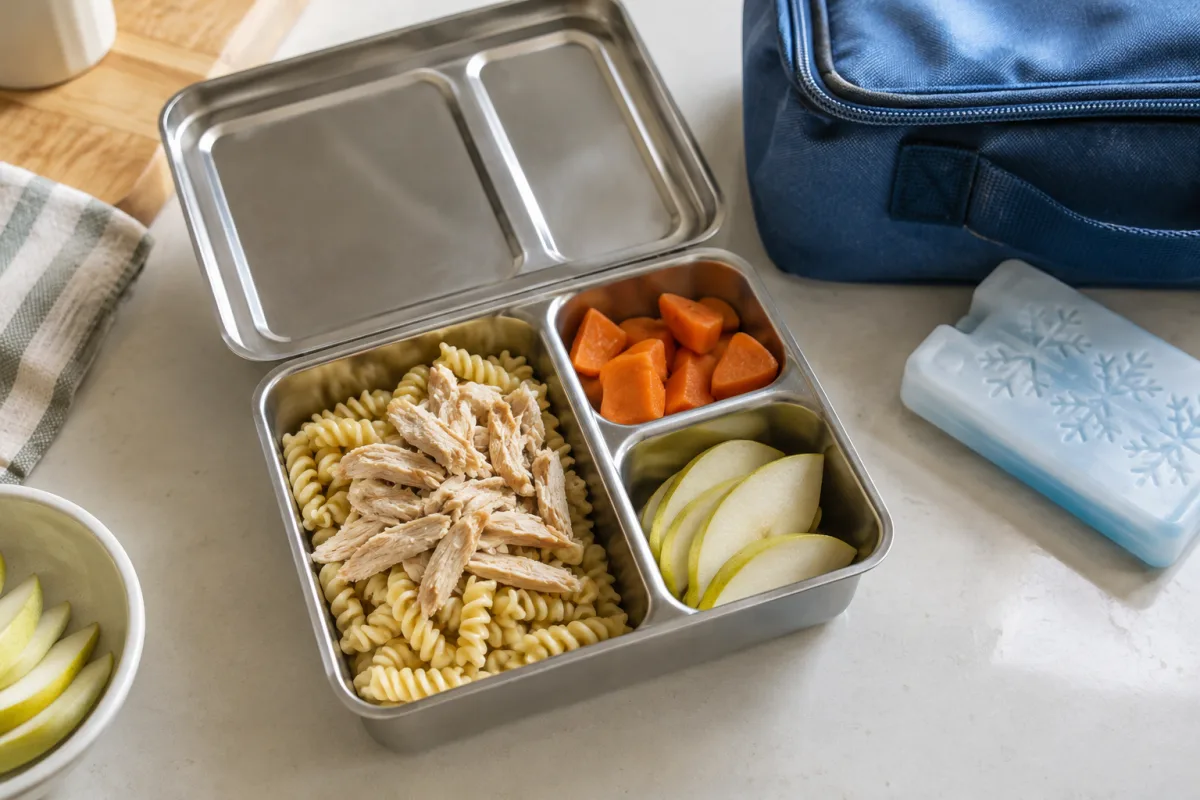
Bento-style compartments solve the foods-must-not-touch problem, which is a real and reasonable preference at this age rather than something to argue with.
- The classic: sandwich triangles, cheese cubes, cucumber, strawberries
- Snack-box lunch: crackers, cheese, turkey slices, grapes quartered lengthways, carrot sticks
- Mediterranean: pitta, hummus, olives, cucumber, cherry tomatoes quartered
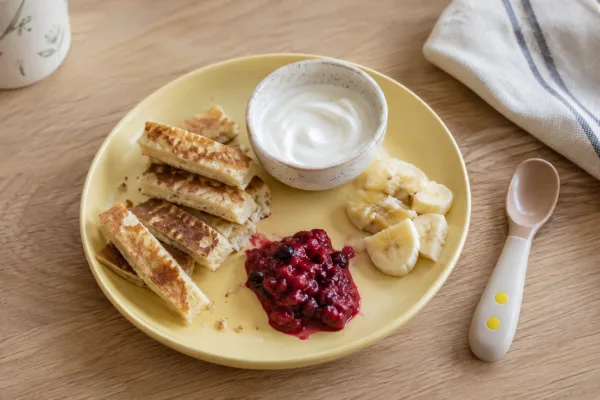
- Breakfast-for-lunch: pancakes, yoghurt pot, blueberries quartered
- Pasta box: cold pasta, peas, sweetcorn, cheese cubes
- DIY pizza box: mini bases, sauce pot, grated cheese
- Rainbow box: one thing of each colour — a surprisingly effective framing
- Dip box: cream cheese or hummus with four things to dip
When you're out of everything
- Toast and butter with fruit
- Porridge — a legitimate lunch
- Crackers, cheese, apple
- Peanut butter on toast, thinly spread
- Frozen peas, warmed, with cheese
- Tinned sweetcorn and a boiled egg
- Smoothie with toast fingers
- Plain yoghurt with tinned peaches
Stop planning lunch at 11:47am
ToddlerBites builds a week of meals around your child's age, allergies, and the foods they've actually finished — then turns it into a shopping list.
Get ToddlerBites free⚠️ Lunch box safety
- Grapes, cherry tomatoes, blueberries — quarter lengthways, every time, under 4
- No whole nuts or popcorn under 4
- Check your nursery's allergen policy before packing anything with nuts or sesame
- Use an ice pack for dairy, egg, and cooked meat
- Label everything if your child has an allergy
If lunch keeps coming home uneaten
- Send less. A full box reads as a demand; a half-full one gets finished and feels like a win.
- Send the safe food. Lunch away from home is the wrong moment for a new food.
- Check they can open it. A huge proportion of uneaten lunches are simply packaging failures.
- Ask what the other children eat. Peer modelling is powerful at this age.
- Don't interrogate at pickup. "How much did you eat?" makes lunch a test.
If food is coming home untouched most days, meals for picky eaters covers the low-pressure approach, and the picky eater test will tell you whether it's typical fussiness.
Frequently asked questions
What makes a balanced toddler lunch?
A practical toddler lunch combines a protein, a carbohydrate, and a fruit or vegetable. The foods do not need to match or be cooked from scratch. Cheese, crackers, and cucumber can be as balanced as a hot meal, and familiar components often work better than a complicated recipe.
What can I pack for a toddler at daycare?
Pack familiar foods that hold their texture and are easy for a child to handle independently. A simple formula is a sandwich or wrap, one fruit or vegetable, and a protein-rich side such as yoghurt or cheese. Follow the daycare's allergy rules and use an insulated lunch bag where needed.
How much lunch should I serve a toddler?
Start with small portions that do not overwhelm the plate, then offer more when the child finishes. Toddler appetite changes from day to day, so a lightly eaten lunch is not automatically a problem. Look at intake across the week rather than judging one lunch in isolation.
Why does my toddler's lunch keep coming home uneaten?
Common reasons include portions that are too large, food that becomes soggy or difficult to open, too many choices, or a snack served too close to lunch. Ask the caregiver what was accessible and when it was offered before assuming the child dislikes the food.
A note on this guide. This article is general information, not medical advice. Every child is different, and children with medical conditions, developmental differences, or feeding difficulties need an individual plan. Always talk to your pediatrician or health visitor about your own child.