 ToddlerBites
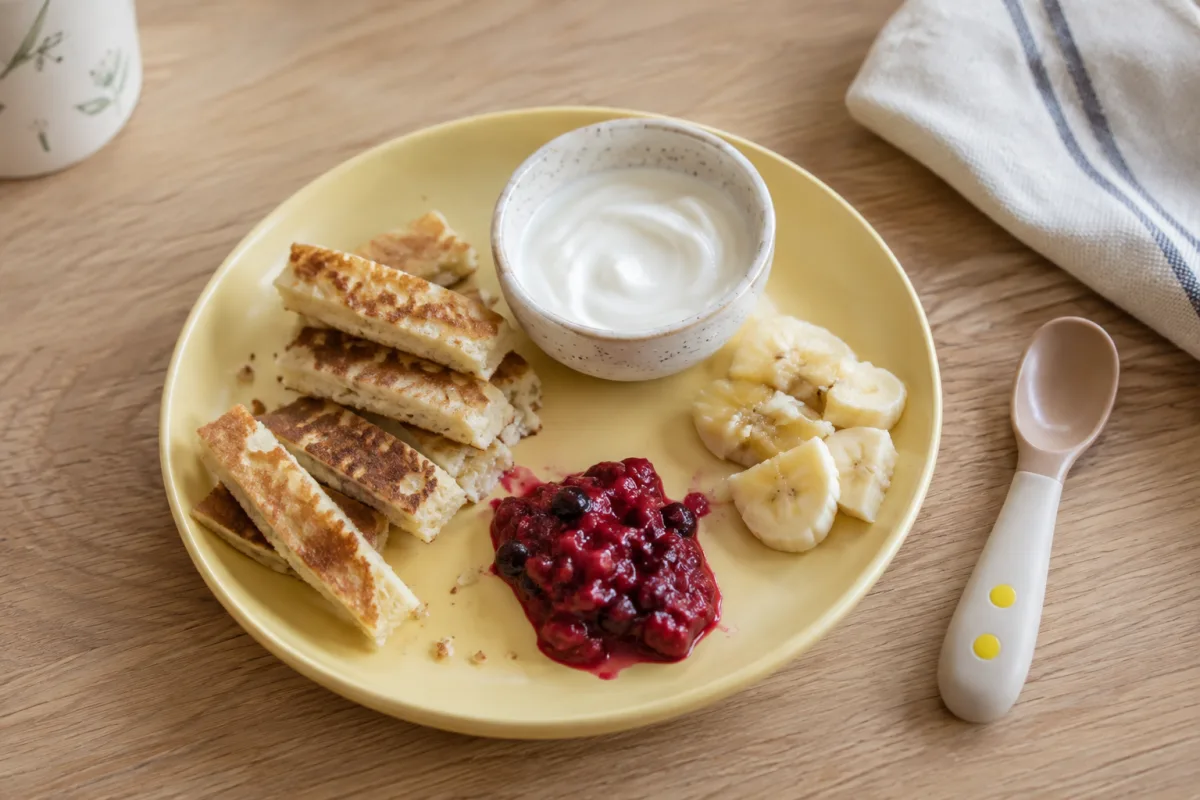
Before the list, the thing that matters more than the list: toddlers who graze continuously are never hungry at mealtimes.
Two to three snacks a day, at roughly set times, with water in between, resolves an enormous share of the dinner refusals parents write to us about. Snacks are small meals — not a different food group, and not a reward.
✓ The pairing rule
Pair a protein or fat with a carbohydrate or fruit. Apple alone is a sugar spike; apple with cheese holds a toddler until dinner. Crackers alone, versus crackers with hummus — same effort, very different outcome.
Which toddler snacks need no preparation?
Nothing to cook, nothing to assemble.
- Cheese cubes or string cheese
- Plain full-fat yoghurt
- Banana
- Soft pear slices
- Cucumber sticks
- Wholegrain crackers
- Breadsticks
- Rice cakes
- Hard-boiled egg
- Clementine segments
- Strawberries, quartered if large
- Raspberries
- Cooked, cooled sweetcorn
- Frozen peas, thawed — oddly popular
- Avocado slices
One-minute assembly
- Apple slices with thin nut butter
- Crackers with cheese
- Hummus with pitta strips
- Yoghurt with berries
- Toast fingers with cream cheese
- Rice cake with mashed avocado
- Cheese and cucumber on a cracker
- Banana with a thin smear of nut butter
- Cottage cheese with soft fruit
- Oatcakes with cheese
- Tortilla rolled with cream cheese, sliced
- Greek yoghurt with a swirl of fruit puree
- Soft pear with cheese cubes
- Guacamole with soft tortilla strips
- Melon cubes with cottage cheese
Make-ahead batches
Sunday effort that pays off all week.
- Banana oat muffins — no added sugar needed if the bananas are ripe
- Mini frittata muffins — freeze well
- Energy balls — oats, banana, seed butter
- Homemade cheese straws
- Courgette and cheese muffins
- Oat bars, cut small
- Pancakes — batch, freeze, toast from frozen
- Roasted chickpeas, squashed soft for under-4s
- Fruit and yoghurt lollies — excellent for teething
- Sweet potato wedges, eaten cold
Store-bought worth buying
- Plain full-fat yoghurt pots — check the sugar on "children's" varieties, which are often high
- Wholegrain crackers with low salt
- Unsweetened dried fruit, in small amounts
- Baby corn puffs
- Pre-cut cheese portions
Reading the label
Two things are worth checking on anything marketed at toddlers: added sugar (frequently high in yoghurts and fruit snacks, even ones labelled "no added sugar" that lean on concentrated fruit juice) and salt (high in many crackers and savoury snacks). Small kidneys handle salt poorly.
Snacks that fit around your child's day
ToddlerBites suggests age-appropriate snacks screened for your child's allergens, and logs them so you can see whether grazing is what's killing dinner.
Get ToddlerBites free⚠️ Snack-time choking hazards
Snacks are where most choking incidents happen, because children often eat them unsupervised or on the move.
- Whole grapes, cherry tomatoes, blueberries — quarter lengthways
- Whole nuts — none under 4
- Popcorn — none under 4
- Raw carrot, raw apple — cook or slice paper-thin
- Hard sweets, marshmallows
- Never in the car, the buggy, or while walking. Always seated
How many snacks a day?
| Age | Typical pattern |
|---|---|
| 6–12 months | Milk-led; solids as practice. Snacks optional |
| 12–24 months | 3 meals + 2–3 snacks |
| 2–3 years | 3 meals + 2 snacks |
| 3+ years | 3 meals + 1–2 snacks |
Aim for roughly two hours between a snack and the next meal. Less than that and dinner is competing with a full stomach.
If snacks are being eaten but meals aren't, that's the pattern to fix first — why is my toddler not eating all of a sudden covers it.
Frequently asked questions
How many snacks should a toddler have each day?
Most toddlers do well with two or three planned snacks between meals. A predictable rhythm gives them regular chances to eat without turning the entire day into grazing. Individual needs vary, but leaving a reasonable gap before meals helps children arrive hungry enough to participate.
What makes a healthy toddler snack?
Treat a snack like a small meal by pairing a protein or fat with a carbohydrate, fruit, or vegetable. Yoghurt with fruit, cheese with crackers, or hummus with soft vegetables usually keeps a child satisfied longer than a carbohydrate-only snack.
Can too many snacks make a toddler refuse meals?
Yes. Continuous grazing means a toddler may never become properly hungry for breakfast, lunch, or dinner. Offer snacks at roughly planned times, serve water between eating opportunities, and leave a gap before the next meal rather than responding to every request with food.
Are store-bought toddler snacks okay?
Store-bought snacks can be useful, especially when travelling, but they do not need to be marketed specifically for toddlers. Choose age-appropriate textures, check choking risks, and compare added sugar and salt. Pairing a packaged carbohydrate with fruit, yoghurt, or cheese makes it more filling.
A note on this guide. This article is general information, not medical advice. Every child is different, and children with medical conditions, developmental differences, or feeding difficulties need an individual plan. Always talk to your pediatrician or health visitor about your own child.