 ToddlerBites
Two useful facts about toddler breakfast:
One: appetite is typically highest in the morning and lowest at dinner. If you want to offer an unfamiliar food, breakfast is the moment with the best odds.
Two: pairing protein or fat with a carbohydrate holds them far longer than carbohydrate alone. Toast with butter and an egg beats toast with jam by a wide margin, and the difference shows up as a calmer 10am.
Which toddler breakfast ideas need no cooking?
- Yoghurt with berries and a sprinkle of oats
- Wholegrain cereal with whole milk and banana
- Toast with nut butter, thinly spread
- Cheese on toast, untoasted, if that's the mood
- Overnight oats made the night before
- Cream cheese bagel with soft fruit
- Fruit and yoghurt smoothie with toast fingers
- Cottage cheese with peach slices
- Avocado on toast
- Leftover pancakes from the freezer, toasted
Five minutes or less
- Scrambled eggs on toast
- Porridge with mashed banana
- Boiled egg with soldiers
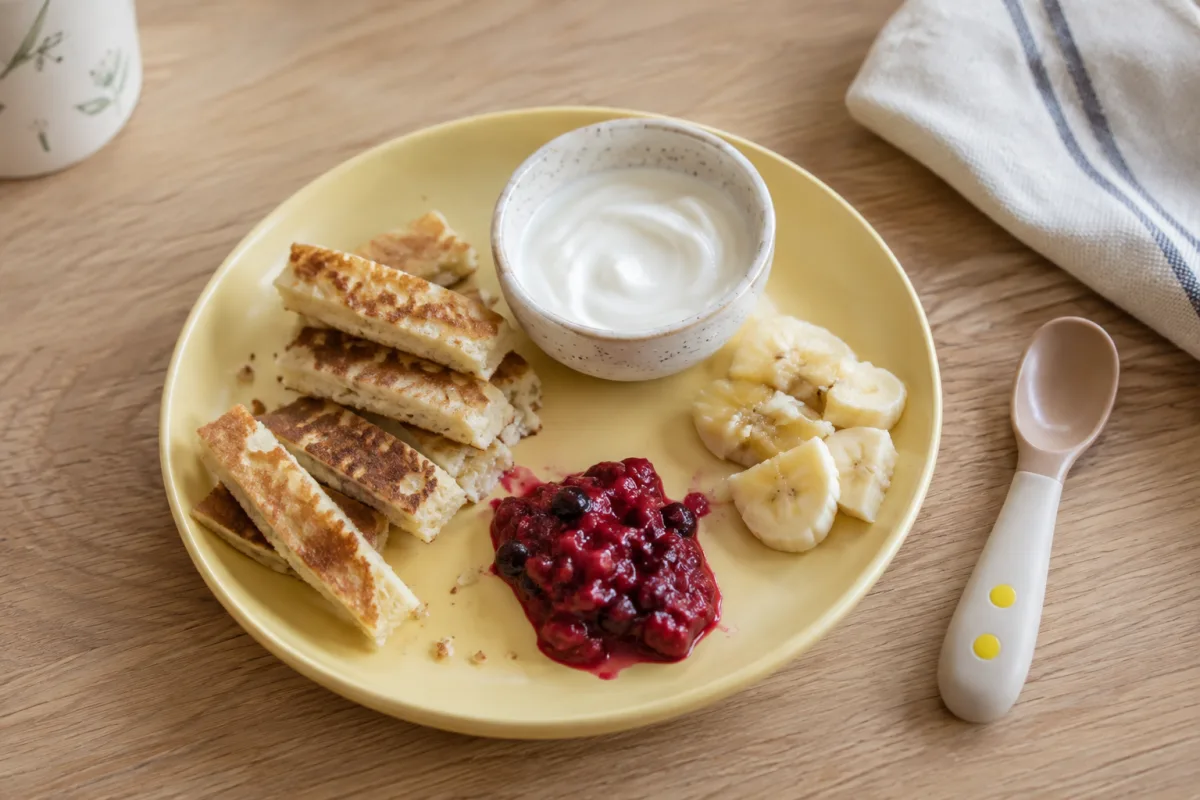
- French toast fingers
- Omelette strips with cheese
- Baked beans on toast
- Weetabix with warm milk and fruit
- Fried egg on a muffin
- Microwave porridge with cinnamon
- Cheese and tomato on toast
Weekend and make-ahead
- Banana pancakes — two ingredients, banana and egg
- Blueberry oat muffins
- Mini frittatas, batched and frozen
- Baked oats
- Waffles from the freezer
- Breakfast burrito, cut into rounds
- Shakshuka, mild, with bread for dipping
- Overnight chia pudding
- Sweet potato toast with nut butter
- Full breakfast plate — egg, toast, tomato, mushroom
✓ Freeze the pancakes
Make a double batch at the weekend, freeze flat, and toast straight from frozen on weekday mornings. Ninety seconds to a hot breakfast is the difference between a calm morning and cereal-again guilt.
Breakfast sorted before you're awake
ToddlerBites plans every meal of the week — including the ones at 6:40am — around your child's age and allergies.
Get ToddlerBites freeWhat to go easy on
- Children's cereals — frequently very high in sugar. Check per 100g rather than trusting the front of the box.
- Flavoured yoghurts — often as sugary as dessert. Plain full-fat with fruit stirred in gives you control.
- Fruit juice — not needed. Water or milk is the answer, and juice at breakfast sets up an expectation.
- Pastries — fine occasionally, but they won't hold a toddler past mid-morning.
⚠️ Breakfast safety notes
- No honey under 12 months — including on toast or baked into muffins
- Blueberries quartered under 4
- Nut butter thinly spread, never a thick spoonful
- Check porridge temperature in the middle — it holds heat unevenly
- Whole cow's milk as a main drink only from 12 months
For the rest of the day, see toddler lunch ideas and toddler dinner ideas.
Frequently asked questions
What makes a balanced toddler breakfast?
Pair a protein or fat with a carbohydrate and add fruit when convenient. Eggs with toast, yoghurt with oats, or nut butter spread thinly on bread tends to satisfy longer than fruit or dry cereal alone. The foods can stay simple and do not need to be made from scratch.
What can I give a toddler for breakfast without cooking?
Useful no-cook breakfasts include yoghurt with oats and fruit, toast with a thin spread of nut butter, cereal with milk plus fruit, or cheese with bread and cucumber. Choose textures and food shapes appropriate for the child's age and known eating skills.
Is cereal a healthy breakfast for a toddler?
Cereal can be part of breakfast. Compare added sugar and salt, choose a texture the child can manage, and pair it with milk or yoghurt and fruit. Cereal on its own may not keep a toddler satisfied for as long as a breakfast that includes protein or fat.
Why is my toddler hungrier at breakfast than dinner?
Many toddlers have their strongest appetite earlier in the day and eat less by dinner, especially after meals, snacks, and milk. This pattern can be normal. Use breakfast as an opportunity to offer variety and assess intake across the whole day or week rather than one evening meal.
A note on this guide. This article is general information, not medical advice. Every child is different, and children with medical conditions, developmental differences, or feeding difficulties need an individual plan. Always talk to your pediatrician or health visitor about your own child.