 ToddlerBites
| Age | Total daily fluid from drinks |
|---|---|
| Under 6 months | Breast milk or formula only — no water needed |
| 6–12 months | Milk remains primary; small sips of water with meals |
| 1–3 years | About 1 to 1.4 litres, including milk |
| 4–8 years | About 1.6 litres |
These are guides, and needs rise noticeably in hot weather, during illness, and with activity. Food contributes too — fruit and vegetables carry a lot of water.
⚠️ Babies under 6 months
Do not give water to a baby under six months unless a doctor advises it. It can displace milk and, in volume, disrupt the balance of sodium in the blood. From six months, small sips of water with meals are fine.
How much water should a toddler drink, and does milk count?
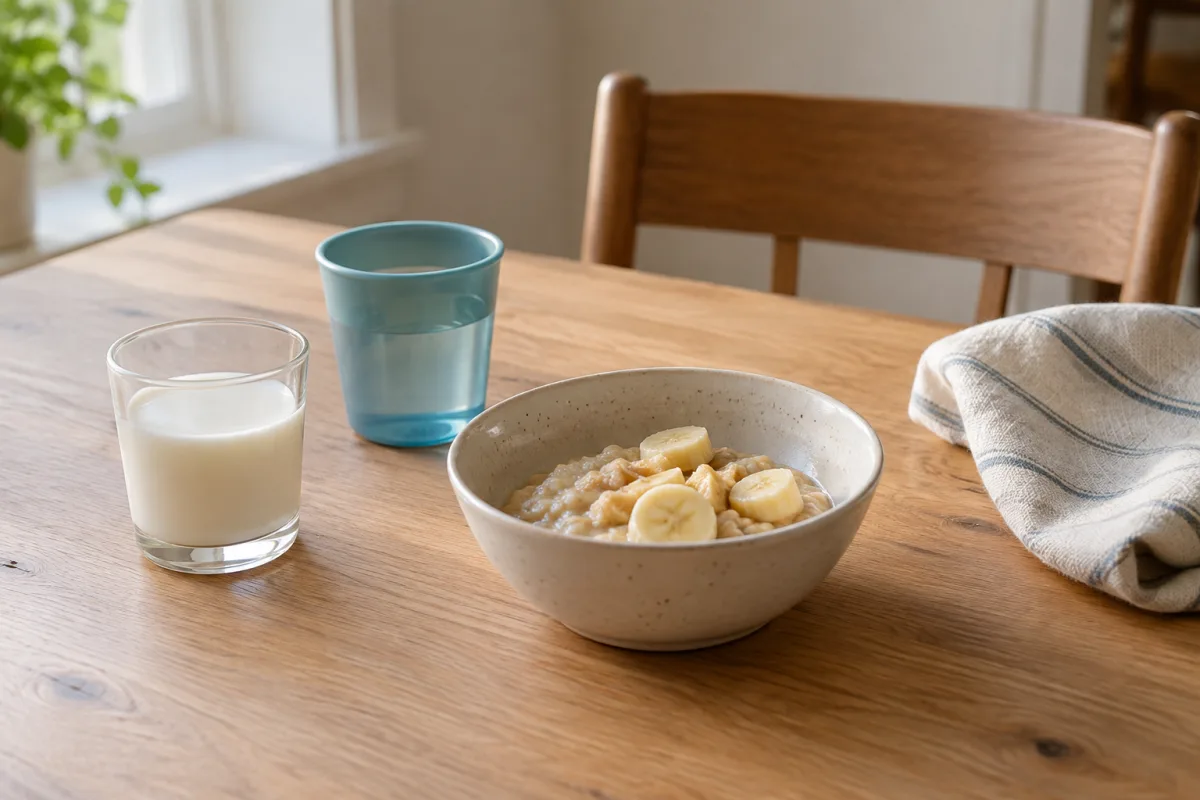
A toddler drinking 800ml of milk a day is technically well hydrated. They are also not hungry, frequently constipated, and often iron-short — because milk is filling, low in fibre, low in iron, and displaces everything else.
If your child seems to drink little water, check the milk volume first. It is very often the whole explanation. Around 350–500ml a day is the usual target after 12 months.
And juice
Juice is not needed at any age. It delivers sugar without the fibre of whole fruit, is associated with tooth decay, and sets an expectation that drinks should taste of something — which makes plain water a harder sell afterwards. If you do give it, dilute it heavily, keep it to mealtimes, and treat it as occasional.
Getting a reluctant toddler to drink
- Make it visible and reachable. A cup left within reach gets sipped from far more than one that has to be requested.
- Let them choose the cup. Autonomy is disproportionately effective at this age.
- Water with meals, milk after. This single change fixes both hydration and appetite in a lot of households.
- Try a straw. Many toddlers who refuse an open cup will drink enthusiastically through a straw. Novelty is doing real work here.
- Add ice. Frequently the entire solution, for reasons known only to toddlers.
- Fruit in the water — a few berries or a slice of cucumber. Interest, essentially no sugar.
- Water-rich foods count — melon, cucumber, oranges, soup, yoghurt.
- Drink yours alongside them. Modelling beats instructing.
- Don't force it. Pressure around drinking works exactly as badly as pressure around eating.
✓ Ice lollies are hydration
Frozen fruit-and-water lollies are a genuinely effective way to get fluid into a toddler who is refusing cups, and they help during teething. Home-made from blended fruit and water avoids the sugar load of shop-bought.
Track drinks alongside meals
ToddlerBites logs what your child drinks as well as what they eat, which makes it obvious when milk is quietly crowding out both water and food.
Get ToddlerBites free⚠️ Signs of dehydration — seek medical advice
- Fewer wet nappies than usual, or no urination for many hours
- Dark, strong-smelling urine
- Dry mouth or lips, no tears when crying
- Sunken eyes, or a sunken soft spot in babies
- Unusual drowsiness, floppiness, or irritability
- Cold or blotchy hands and feet
Dehydration develops quickly in small children, especially alongside vomiting or diarrhoea. Seek medical help promptly rather than waiting.
If low fluid intake has come with hard stools, toddler constipation covers the food side.
Frequently asked questions
How much water should a toddler drink each day?
Toddlers aged 1 to 3 need roughly 1 to 1.4 litres of total fluid a day from drinks, including milk. The amount of plain water varies with weather, activity, food, and how much milk the child drinks.
Does milk count toward a toddler's fluid intake?
Yes. Milk contributes to total fluid intake, but large amounts can suppress appetite and displace iron-rich food. Water is the best default drink between meals.
How can I encourage my toddler to drink water?
Keep a small cup visible and within reach, offer water at meals and after active play, and let the child choose an open cup or straw cup. Avoid making sweet drinks the expected alternative.
What are signs that a toddler may be dehydrated?
Seek medical advice for noticeably reduced urination, a very dry mouth, unusual sleepiness, no tears when crying, or an inability to keep fluids down, especially during vomiting, diarrhoea, fever, or hot weather.
A note on this guide. This article is general information, not medical advice. Every child is different, and children with medical conditions, developmental differences, or feeding difficulties need an individual plan. Always talk to your pediatrician or health visitor about your own child.