 ToddlerBites
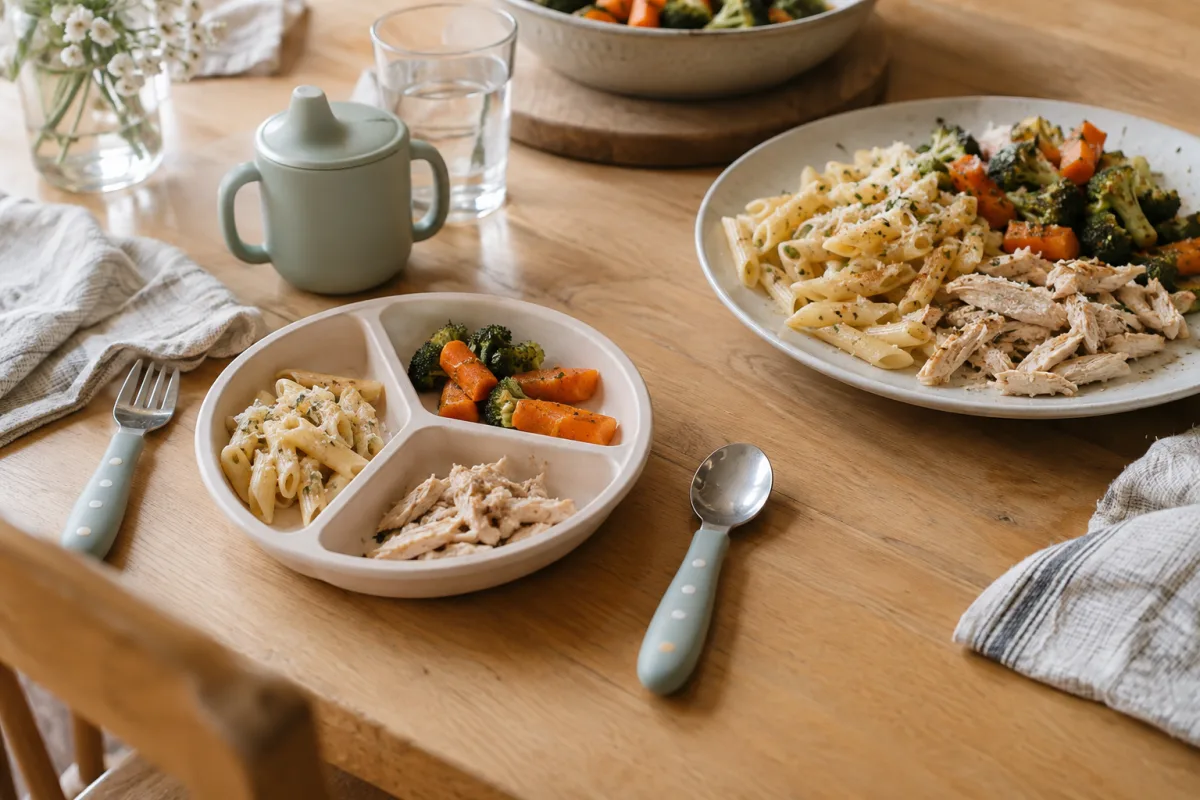
“Did lunch already happen?” is an easy question to lose in a busy handoff. A short shared note gives the next caregiver a starting point, whether that person is a grandparent for the afternoon or a nanny arriving each morning.
The note does not need to explain your entire parenting approach. It needs to make today’s plan clear and point to the instructions that matter.
Separate the standing plan from today’s update
The standing plan changes occasionally: the family’s routine, agreed feeding support, where supplies are stored, and how to reach a parent. Any clinician-provided allergy or emergency plan should remain its own authoritative document. Link to or identify its location instead of rewriting it from memory.
Today’s update changes every handoff: the last meal or snack, what is ready in the fridge, an item that has run out, and any question to follow up on. Put the date on it so yesterday’s note cannot quietly become today’s instruction.
Copy this caregiver handoff template
TODAY’S FEEDING HANDOFF
Date and time:
From / to:
Last meal or snack offered:
What was noticed:
Next planned meal or snack:
Food and supplies ready / location:
Today’s changes or questions:

STANDING INFORMATION
Usual routine:
Agreed preparation or feeding support:
Location of current care / allergy instructions:
Parent or guardian contact:
Date standing information was checked:
Keep contact details and private care information in a place available only to the people who need them. A public social post or family photo caption is not a suitable home for this record.
A simple handoff in practice
Illustrative example: “Wednesday, 1:30 p.m., Alex to Grandma. Lunch was offered at noon. Some pasta eaten; vegetables left. Snack supplies are on the labeled fridge shelf. We are out of clean small spoons; use the spare in the drawer. Please leave a short note after snack.”
Notice what is absent: a grade, a guess about exactly what the child needs next, or a demand to make up for lunch. The note reports what happened and makes the next practical task easier.
Agree on what counts as a useful update
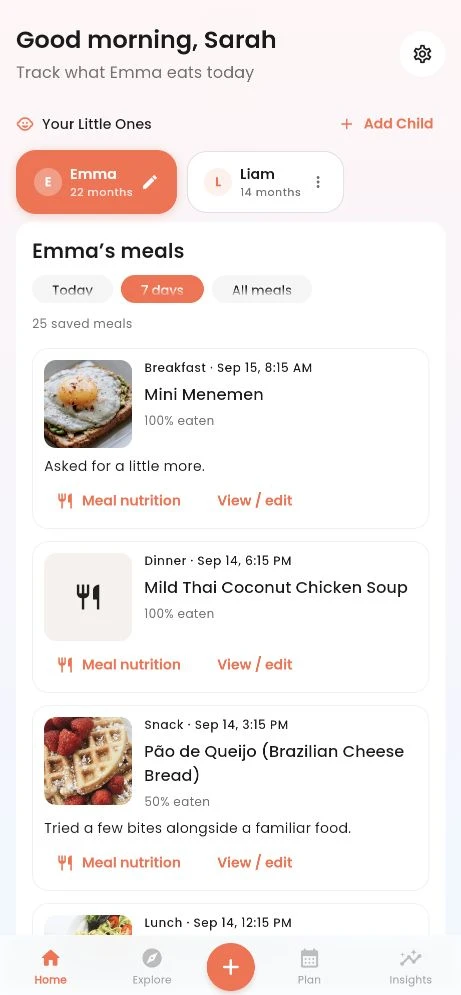
Ask every caregiver to use plain observations: “tried a bite,” “asked for more,” or “left it.” When a detail comes from someone else, name that source. If nobody remembers, “not recorded” is more useful than an estimate presented as fact.
Before a new caregiver’s first meal, walk through the setup together. CDC’s mealtime guidance emphasizes a secure seat, supervision, and allowing children to decide how much to eat. Read the routine and supervision guidance.
Keep important changes out of the scrolling chat
A revised care instruction or a changed pickup plan deserves a direct conversation and acknowledgment. Do not rely on a photo, an app notification, or a long group chat to establish that someone understood an important change.
Pick one person to keep the standing information current. When there is a new version, date it and retire the old copy. At the end of a handoff, ask the receiving adult if anything is unclear.
Where ToddlerBites fits
ToddlerBites supports meal records and caregiver profile sharing. Use the app’s meal history as a reference alongside the handoff, and confirm what the invited caregiver can see when you set up access. A copied profile and an actively shared meal history are different workflows; check your app’s sharing option together.
Our guide to tracking with multiple caregivers explains the use case, while the meal log template helps keep individual entries short. A useful system is the one everyone involved can understand and keep using.
A little help for your next meal.
Explore the app, a free meal plan, and practical guides for your family.
Find your starting pointGeneral information, not individualized medical advice. Follow your child’s care plan and speak with their clinician about feeding or growth concerns. Examples and templates on this page are illustrative.