 ToddlerBites

If you already have thirty saved recipes, finding another one may not solve tonight’s problem. What often needs deciding is which meal belongs on which day, who will make it, and whether the ingredients are actually there.
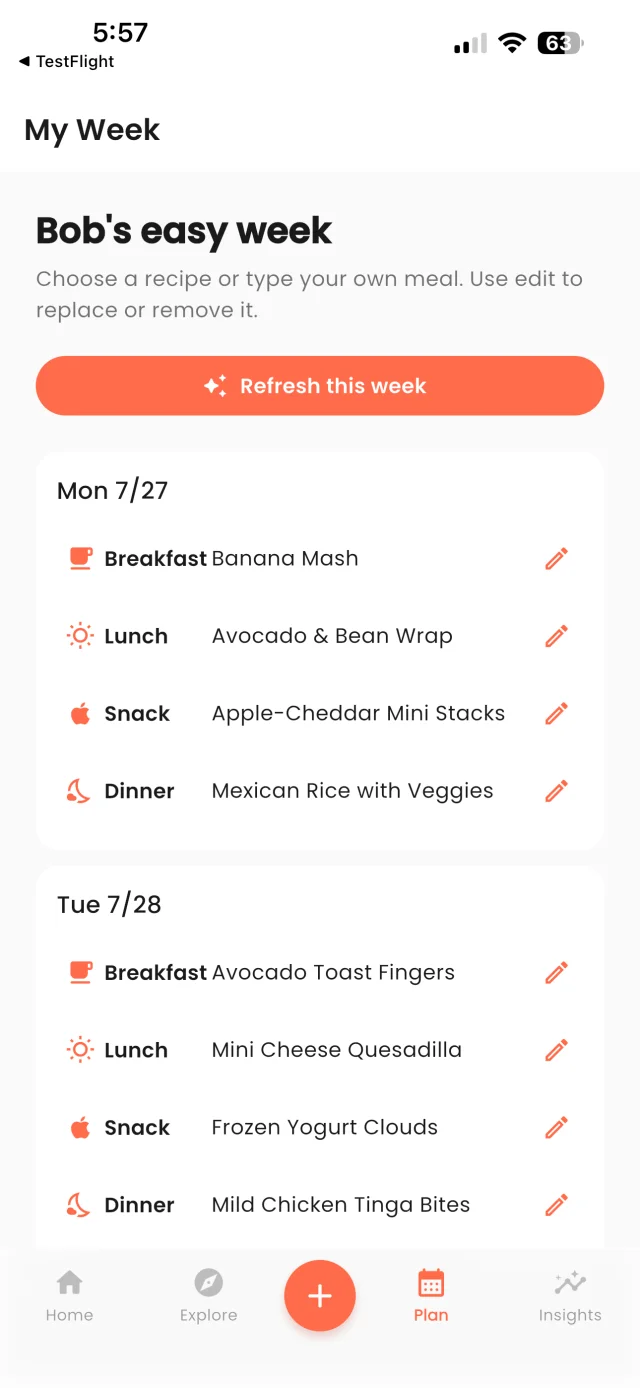
Use this short routine before your usual shop. You can write it on paper, in a notes app, or alongside the weekly plan in ToddlerBites. The aim is a usable first draft, not a complete new menu for every eating occasion.
Minutes 0–3: look at the real week
Mark late workdays, daycare days, evenings with another caregiver, and times you expect to eat elsewhere. Put the simplest cooking task on the tightest evening. Check who is preparing food before assigning them a recipe.
Start with dinners if that is where the decisions pile up. You can add breakfast, lunch, and snacks later. Planning a smaller part of the week well is more useful than creating a full chart nobody can follow.
Minutes 3–7: choose a few meals to repeat
Pick meals your household already makes, then add a new idea only if you want to. Choose familiar components and adapt preparation to your child’s needs. The American Academy of Pediatrics suggests including a food the child likes alongside other offered foods and avoiding pressure to eat. See AAP’s picky-eating tips.
Give each selected dinner a role: the quick one, the shared family meal, or the evening another adult handles. A repeat does not need to look identical. What matters for planning is knowing the main preparation job before the day arrives.
| Day | Planning decision | Question to resolve |
|---|---|---|
| Monday | A familiar quick meal. | Are the ingredients already at home? |
| Tuesday | A meal the family already cooks. | What preparation does the toddler need? |
| Wednesday | A caregiver-led evening. | Who has the plan and the supplies? |
| Thursday | Another familiar option. | Can the same shopping ingredients help? |
| Friday | A flexible evening. | What changed during the week? |
Minutes 7–11: check the kitchen before the shop
Look for the ingredients each chosen meal needs. Write “have,” “buy,” or “check” beside them. “Check” is useful when someone else may have used the last portion or when you need to confirm a label before buying a substitute.
Do not plan around a remembered container at the back of the fridge without checking it. When a meal depends on food stored for later, use the relevant storage instructions rather than assuming it will keep until that day.
Minutes 11–15: finish the list and the handoff
Group missing ingredients in a way that suits your shop. Put a quantity beside each item where you know it. Add the small non-food things that can derail dinner, such as the container needed for tomorrow’s packed lunch.
Then share the plan with the adults involved. Leave one sentence about the flexible evening and where to find the shopping list. If one person shops and another cooks, confirm that they are both looking at the same version.
Keep a fallback that fits your household
Choose an easy option using ingredients you routinely buy and preparation your child can manage. Its job is to help when the day changes, not to become a reward for refusing a meal. For ideas, browse easy toddler meals and keep a couple of realistic favorites.
If you would rather begin with a ready-made outline, the free seven-day meal plan is a starting point for children 12 months and older. Adapt it to your family, allergies, and any individual feeding guidance.
Review one thing, then move on
At the next planning session, ask which decision saved effort and which one was unrealistic. Repeat the useful part. You do not need to score the week or change the whole system because one dinner went differently.
ToddlerBites has weekly meal planning, pantry, and shopping-list tools. Use those to organize the decisions; your family’s calendar and the food actually available still lead the plan. For a longer cooking session, see our separate meal-prep guide.
A little help for your next meal.
Explore the app, a free meal plan, and practical guides for your family.
Find your starting pointGeneral information, not individualized medical advice. Follow your child’s care plan and speak with their clinician about feeding or growth concerns. Examples and templates on this page are illustrative.